Showing posts with label psychology. Show all posts

Betty Ford 1918-2011

I was 24 years old when I walked into my first AA meeting. Too young?

Certainly, I already looked like I belonged there, swathed in discarded old scarves like some pitiful hippie-ragamuffin. Although it was dark, icy and cold--January in Ohio--I had walked to the meeting at St Aloysius on West Broad Street. That fact seemed to impress the people at the meeting more than anything I had actually said, which was likely a jumble of drug-addled gibberish that made no sense.

I held onto the one hope I had: too young? Am I too young?

And then, she just sort of settled into my mind. Her presence. It was like she was with me.

The president's wife, you nitwit. It could be anyone. Anyone.
A-N-Y-O-N-E. Any age, any sex, anywhere; there is no membership requirement except the desire to stop drinking.

But... but...

Shut UP, said my conscience, eager to win one for a change. Shut UP. The president's fucking wife.

Anyone.

And she remained there, a presence in my consciousness, a presence occupying my head without my full realization... until now. And she is gone.

Betty Ford was crucial to me, to us. She was so important, possibly the most important person in the American recovery movement save for the founders of Alcoholics Anonymous. Because she was Anyone. She was the respectable person who passed out at a dinner given in her honor. She was a rich man's wife who started to drink to deal with social pressures. And she wasn't Dick Van Dyke or Robert Downey Jr, either, she was a WOMAN. A lady. She had been, after all, the First Lady.

If it could happen to her, it could happen to you. (And do you know how many times I have heard that phrase, in meetings, in monologues, in phone conversations? I have said it myself, and it has been said to me.) Why do you think it couldn't? Who do you think you are? Of course it could. Luck, goodness, intelligence, class, decency, none of that means squat: you can't handle it, leave it alone. Even she had to. It could be anyone.

Anyone.

And how many lives were saved, all because we could point to her and confidently announce, ANYONE? Her presence, her life, became an object lesson for millions... certainly, it was very important to me, to know that she was in our ranks. See? I'm not the only girl! (In 1982, it often felt like I was.)

My deep affection and love for this woman is hard to convey. Her simple honesty and her life lessons, helped so many of us. Just her presence, in our minds, meant so much.

Her legacy overshadows her husband's easily.

Rest in peace.

Scientology Examined by the New Yorker

"When we need somebody haunted we investigate. When we investigate we do so noisily always." - L. Ron Hubbard, MANUAL OF JUSTICE, 1959


I first met Scientologists when they showed up (uninvited) at various and sundry Yippie events, particularly Smoke-Ins, throughout the 70s. They seemed to think they could convert pot-smokers. This is possibly because the only time their theology makes any real sense is when you are stoned out of your mind. We regarded them as just another kooky 70s cult, like the Moonies, who would usually show up wherever and whenever the Church of Scientology did. It's like they were competing for the same members.

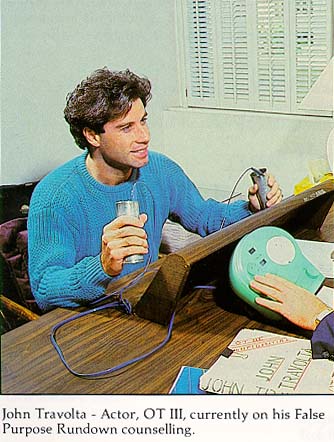
The Scientologists used to set up shop in a little booth (always smiling smiling smiling in a spooky, eager-beaver fashion), with those little tin-can things for "auditing"--called an E-meter. You see the E-meter, you know who it is.

A band of Yippies trooped up to them at one such local event, rudely pawing the sacred E-meter and peppering them with dumb questions. Finally, one Yippie put one tin can to his ear as the second Yippie started bellowing into it: "What?! What?! Play some BLACK SABBATH!"... causing onlookers to guffaw appreciably. Rather than becoming merely grim and humorless (as Christians might) or rolling their eyes and telling us all to GROW UP (as right-wingers would), the Scientologists suddenly appeared completely furious and could barely contain their anger. One became red-faced and livid: "Back off!" he hissed at the Black Sabbath fan, who seemed shocked and put the tin can down, appropriately backing off. "Those people are crazy," he whispered to me later. "You can feel the insanity vibe, just radiating off them," he said. Wow, really?

Some years later, I would walk by the same E-meter audit-set-up in downtown Columbus, Ohio (in front of the State House, no less), accompanied by some bright yellow balloons. My daughter, about three years old at the time, pointed at the gaily-colored balloons and wanted one. Pointing at the auditing cans (flanked by numerous copies of the tell-tale book Dianetics), I replied, "You don't want those balloons, hon, those are Scientologist Balloons!" --chortling at my own wit. Then I saw a business-suited-woman standing near the booth, and felt embarrassed she had heard me. I felt sheepish and giggled (exactly as I might act in front of a nun), but the Scientologist (auditing-Thetan, in this case) wasn't amused. She gave me the most hateful, evil look I have ever witnessed--and this includes nasty looks from right-wing maniacs and Reaganoids I have protested against over the decades. It was a glowering, focused, scary look. Damn, these people mean business, I thought. And from that point onward, I was very interested in the Church of Scientology. Rather like The Visitors who come in peace... well, sure they do.

Scientology-founder L. Ron Hubbard once wrote an amazing horror novel titled FEAR, which can scare the beJesus right out of you. After reading it and having a few nightmares, I realized that a man who could write like this could easily get to the bottom of an unruly or confused psyche and turn it upside down in record time. (I could not even bear to put the novel down, and I knew it was by L. Ron Hubbard.) FEAR's level of restrained paranoia/freak-out is incredible; the dramatic tension is not fully resolved until the last pages. Any religion started by this guy is going to be BLOODY HEAVY indeed, I thought.

And now, we have a famous Scientology-defector they can't eliminate, drive crazy or simply ignore: movie director Paul Haggis, who has gone public. He reached the second-highest level in the Church, Operating Thetan VII.

I have seen the New Yorker article titled The Apostate: Paul Haggis vs. the Church of Scientology posted in about a half-dozen places already, so let me add my link.

It's long, but contains some real doozies. Brother and sister scandalmongers, you must read it:
Many Hollywood actors were drawn into the church by a friend or by reading “Dianetics”; a surprising number of them, though, came through the Beverly Hills Playhouse. For decades, the resident acting coach there was Milton Katselas, and he taught hundreds of future stars, including Ted Danson, Michelle Pfeiffer, and George Clooney. “Most of Hollywood went through that class,” Anne Archer told me.
...
Jim Gordon, a veteran police officer in Los Angeles, and also an aspiring actor, spent ten years at the Playhouse, starting in 1990. He told me that Scientology “recruited a ton of kids out of that school.” Like Scientology, the Playhouse presented a strict hierarchy of study; under Katselas’s tutelage, students graduated from one level to the next. As Gordon advanced within the Playhouse, he began recognizing many students from the roles they were getting in Hollywood. “You see a lot of people you know from TV,” Gordon says. He began feeling the pull of the church. “When you started off, they weren’t really pushing it, but as you progressed through the Playhouse’s levels Scientology became more of a focus,” he told me. After a few years, he joined. Like the courses at the Playhouse, Scientology offered actors a method that they could apply to both their lives and their careers.
Finally, an explanation for why so many actors are Scientologists; they actually targeted the industry from the inside. I had mistakenly believed they zeroed in on celebrities from the outside, you know, like they did the pot-smokers. Nope, they get them while they are studying for something else entirely. Interesting.
Katselas received a ten-per-cent commission from the church on the money contributed by his students.

Katselas died in 2008, and Scientology no longer has a connection with the Beverly Hills Playhouse. Anne Archer told me that the reputation of Katselas’s class as, in Gordon’s words, a “Scientology clearinghouse” is overblown. “His classes averaged about fifty or sixty people, and there would be maybe seven to ten people in it who would be Scientologists,” she says. But the list of Scientologists who have studied at the Playhouse is long—it includes Jenna Elfman, Giovanni Ribisi, and Jason Lee—and the many protégés Katselas left behind helped cement the relationship between Hollywood and the church.
More goodies from the article, which you should read and pass around:
David S. Touretzky, a computer-science professor at Carnegie Mellon University, has done extensive research on Scientology. (He is not a defector.) He estimates that the coursework alone now costs nearly three hundred thousand dollars, and, with the additional auditing and contributions expected of upper-level members, the cumulative cost of the coursework may exceed half a million dollars. (The church says that there are no fixed fees, adding, “Donations requested for ‘courses’ at Church of Scientology begin at $50 and could never possibly reach the amount suggested.”)
That pesky inflation!

And by the way, although the church doesn't like it when you refer to the E-meter as "tin cans"--according to this article, it STARTED as mere SOUP CANS, seriously:
During auditing, Haggis grasped a cylindrical electrode in each hand; when he first joined Scientology, the electrodes were empty soup cans. An imperceptible electrical charge ran from the meter through his body. The auditor asked systematic questions aimed at detecting sources of “spiritual distress.” Whenever Haggis gave an answer that prompted the E-Meter’s needle to jump, that subject became an area of concentration until the auditor was satisfied that Haggis was free of the emotional consequences of the troubling experience.
And finally... yes, at long last, we're getting to Xenu! You knew he was coming!

Only a really great horror/sci-fi mind could have hatched Xenu:
The church, which considers it sacrilegious for the uninitiated to read its confidential scriptures, got a restraining order, but the Los Angeles Times obtained a copy of the [Thetan] material and printed a summary. Suddenly, the secrets that had stunned Paul Haggis in a locked room were public knowledge.

“A major cause of mankind’s problems began 75 million years ago,” the Times wrote, when the planet Earth, then called Teegeeack, was part of a confederation of ninety planets under the leadership of a despotic ruler named Xenu. “Then, as now, the materials state, the chief problem was overpopulation.” Xenu decided “to take radical measures.” The documents explained that surplus beings were transported to volcanoes on Earth. “The documents state that H-bombs far more powerful than any in existence today were dropped on these volcanoes, destroying the people but freeing their spirits—called thetans—which attached themselves to one another in clusters.” Those spirits were “trapped in a compound of frozen alcohol and glycol,” then “implanted” with “the seed of aberrant behavior.” The Times account concluded, “When people die, these clusters attach to other humans and keep perpetuating themselves.”
As that wise old shopkeeper on the old Friday the 13th TV show was always saying: It all makes a terrible sense.

And you wondered when Tom would show up.
In 2004, Cruise received a special Scientology award: the Freedom Medal of Valor. In a ceremony held in England, Miscavige called Cruise “the most dedicated Scientologist I know.” The ceremony was accompanied by a video interview with the star. Wearing a black turtleneck, and with the theme music from “Mission: Impossible” playing in the background, Cruise said, “Being a Scientologist, you look at someone and you know absolutely that you can help them. So, for me, it really is K.S.W.”—initials that stand for “Keeping Scientology Working.” He went on, “That policy to me has really gone—phist!” He made a vigorous gesture with his hand. “Boy! There’s a time I went through and I said, ‘You know what? When I read it, you know, I just went poo! This is it!’ ” Later, when the video was posted on YouTube and viewed by millions who had no idea what he was talking about, Cruise came across as unhinged.
Ya think?

(More fun with Tom below. Could not resist!)

As the father of two gay daughters, Haggis finally broke with the church over their funding of anti-gay Proposition 8, which banned gay marriage in California. And then he studied and found out more...

As they say, read it all.

~*~


[NOTE: The only other time I have written about Scientology at DEAD AIR, was about the death of Jett Travolta, which was predictably covered up.]

Edit: The last few seconds of the video cautions that all copies are quickly removed by the church of Scientology, so you should download it yourself and upload it to YouTube after this copy is removed. Create a different account for this purpose, since they go after that, too.

Stalemate and ADD

I keep drawing the Two of Swords, which I can't figure out. I've never drawn it for myself until lately. The problem with attempting to read one's own tarot (or be one's own therapist!) is that you simply can't figure out this stuff for yourself, just as we can't always figure out we don't look good in certain clothes we love anyway. No objectivity!

And it doesn't help that many of the tarot-experts and sources can't agree on the card's meanings. Hm.

I choose the meaning I think is most likely: Stalemate. I am stalemated. At least I know that much.

However, if I am indeed lying to myself (one of the meanings of the Two of Swords), how could I know what the card means? Obviously, I am already in denial, and that means I don't have a clue.

She really needs to take off the blindfold!

~*~

Speaking of blindfolds (how's that for a segue?), Chaos is Normal posted FTY: Students, which included an excerpt from a bang-up interview (by Amy Goodman) of one Canadian Dr Gabor Maté. This incisive excerpt sent me over to Democracy Now to listen to the whole show, titled Dr. Gabor Maté on the Stress-Disease Connection, Addiction, Attention Deficit Disorder and the Destruction of American Childhood. Highly recommended!

I hear about ADD every day, as my customer-parents attempt to deal, often buying supplements for their children. I hear all about the endless "symptoms"--which so often to me, sound like, well, just being a child. When did simple childhood become a disease?

I didn't grow up hearing about ADD, which also fascinates me. Is this some "new and improved" diagnosis, in that case? If so, is our culture to blame for stigmatizing certain behaviors? And as with autism, are those same behaviors possibly 'rewarded' elsewhere? (i.e. the preponderance of autism in the Silicon Valley) Dr Gabor Maté believes actual brain development in children has markedly changed over the last generation or so, due to our radical changes in culture. (I have often believed this about addiction, so when somebody with smarts comes out and backs me up, I am thrilled.)

Quotes from Dr Maté I found especially pertinent:
In the United States right now, there are three million children receiving stimulant medications for ADHD... Attention deficit hyperactivity disorder. And there are about half-a-million kids in this country receiving heavy-duty anti-psychotic medications, medications such as are usually given to adult schizophrenics to regulate their hallucinations. But in this case, children are getting it to control their behavior. So what we have is a massive social experiment of the chemical control of children’s behavior, with no idea of the long-term consequences of these heavy-duty anti-psychotics on kids.

And I know that Canadians statistics just last week showed that within last five years, 43—there’s been a 43 percent increase in the rate of dispensing of stimulant prescriptions for ADD or ADHD, and most of these are going to boys. In other words, what we’re seeing is an unprecedented burgeoning of the diagnosis. And I should say, really, I’m talking about, more broadly speaking, what I would call the destruction of American childhood, because ADD is just a template, or it’s just an example of what’s going on. In fact, according to a recent study published in the States, nearly half of American adolescents now meet some criteria or criteria for mental health disorders. So we’re talking about a massive impact on our children of something in our culture that’s just not being recognized.
...
The normal basis for child development has always been the clan, the tribe, the community, the neighborhood, the extended family. Essentially, post-industrial capitalism has completely destroyed those conditions. People no longer live in communities which are still connected to one another. People don’t work where they live. They don’t shop where they live. The kids don’t go to school, necessarily, where they live. The parents are away most of the day. For the first time in history, children are not spending most of their time around the nurturing adults in their lives. And they’re spending their lives away from the nurturing adults, which is what they need for healthy brain development.
...
In ADD, there’s an essential brain chemical, which is necessary for incentive and motivation, that seems to be lacking. That’s called dopamine. And dopamine is simply an essential life chemical. Without it, there’s no life. Mice in a laboratory who have no dopamine will starve themselves to death, because they have no incentive to eat. Even though they’re hungry, and even though their life is in danger, they will not eat, because there’s no motivation or incentive. So, partly, one way to look at ADD is a massive problem of motivation, because the dopamine is lacking in the brain. Now, the stimulant medications elevate dopamine levels, and these kids are now more motivated. They can focus and pay attention.

However, the assumption underneath giving these kids medications is that what we’re dealing with here is a genetic disorder, and the only way to deal with it is pharmacologically. And if you actually look at how the dopamine levels in a brain develop, if you look at infant monkeys and you measure their dopamine levels, and they’re normal when they’re with their mothers, and when you separate them from mothers, the dopamine levels go down within two or three days.

So, in other words, what we’re doing is we’re correcting a massive social problem that has to do with disconnection in a society and the loss of nurturing, non-stressed parenting, and we’re replacing that chemically. Now, the drugs—the stimulant drugs do seem to work, and a lot of kids are helped by it. The problem is not so much whether they should be used or not; the problem is that 80 percent of the time a kid is prescribed a medication, that’s all that happens. Nobody talks to the family about the family environment. The school makes no attempt to change the school environment. Nobody connects with these kids emotionally. In other words, it’s seen simply as a medical or a behavioral problem, but not as a problem of development.
Daisy pauses to scream a hearty YES!
You see, now, if your spouse or partner, adult spouse or partner, came home from work and didn’t give you the time of day and got on the phone and talked with other people all the time and spent all their time on email talking to other people, your friends wouldn’t say, "You’ve got a behavioral problem. You should try tough love." They’d say you’ve got a relationship problem. But when children act in these ways, we think we have a behavioral problem, we try and control the behaviors. In fact, what they’re showing us is that—my children showed this, as well—is that I had a relationship problem with them. They weren’t connected enough with me and too connected to the peer group. So that’s why they wanted to spend all their time with their peer group. And now we’ve given kids the technology to do that with.
...
...human beings are shaped very early by what happens to them in life. As a matter of fact, they’re shaped already by what happens in uterus. After 9/11, after the World Trade disasters in those terrorist attacks, some women who were pregnant suffered PTSD, post-traumatic stress disorder. And depending on what stage of pregnancy they suffered the PTSD, when they measured their children’s cortisol levels—cortisol being a body stress hormone—at one year of age, those kids had abnormal cortisol levels. In other words, their stress apparatus had been negatively affected by the mother’s stress during pregnancy. Similarly, for example, when I looked at the stress hormone levels of the children of Holocaust survivors with PTSD, the greater the degree of PTSD of the parent, the higher the stress hormone level of the child.

So, how we see the world, whether the world is a hostile or friendly place, whether we have to always do for ourselves and look after others or whether we can actually expect and receive help from the world, whether or not the world is hostile or friendly, and indeed our stress physiology, is very much shaped by those early experiences.
Listen to/read the whole thing; Dr Maté has an overall approach you probably haven't heard before. And I think it helps immeasurably that Dr Maté has ADD himself, and has the necessary inside-understanding to talk about the issues.

His newest book is titled In the Realm of Hungry Ghosts: Close Encounters with Addiction, which I have just ordered from AMAZON.

(Thanks Chaos!)