Showing posts with label The Dirty South. Show all posts

STOP THE EXECUTION OF TROY ANTHONY DAVIS!

It's official: the bloodthirsty Georgia prison system doesn't care. An ex-president, an ex-congressman, an ex-FBI director and the Vatican... nope, nothing stands in the way of the State of Georgia executing an innocent black man! Why, its just like the old days! You are NOT going to pry them away from that needle, because they are having a GOOD TIME.

Troy Anthony Davis will be executed tomorrow.

Death penalty = murder. Yes, it is. Vengeance is the Lord's, not yours.

But let me tell you: If you are in favor of the death penalty, your cause is seriously WEAKENED when an innocent man is put to death.

And Davis is innocent (my opinion)... or at least there are significant questions about his guilt:
Davis has captured worldwide attention because of the doubt his supporters have raised over whether he killed [police officer Mark] MacPhail. Several of the witnesses who helped convict Davis at his 1991 trial have backed off their testimony or recanted. Others who did not testify say another man at the scene admitted to the shooting.

The U.S. Supreme Court even granted Davis a hearing last year to prove his innocence, the first time it had done so for a death row inmate in at least 50 years. But in that June 2010 hearing, Davis couldn't convince a federal judge to grant him a new trial.
Some of the jurors have said, if they knew now what they didn't know then, they would not have voted to convict Davis.

So, seven out of nine witnesses recanting testimony is not enough for a new trial, or even a stay of execution? From the second link, above:
No physical evidence, like his fingerprints on the murder weapon or gunpowder residue on his hands, ever connected Troy to the crime, and he never confessed. The only thing that convicted Troy was the testimony of witnesses, many of whom say police pressured them to identify Troy as the murderer.
This is a monstrosity.

The state of Georgia and the USA, will once again have blood on their hands.

And I write this to say, this abomination known as the DEATH PENALTY, does not speak for me and does not represent me as an American.

Amnesty International is on the case, still, always, right up until they stick the needle in. God Bless them! Also see the update from the National Coalition to Abolish the Death Penalty.

Chatham County's District Attorney's Telephone: 912-652-7308 Fax: 912-652-7328.

Wordless Wednesday: Charleston is purty

Here are some random photos of my quickie Saturday trip to Charleston; I couldn't readily remember the last time I was there. We endured ungodly temperatures by 11am, and I just wilted slowly, the rest of the day... but I still remembered to tell everybody about the radio show!


Accordingly, starting off with Spanish moss, which mostly disappears by the time you get to Columbia, so we don't have any in the upstate. Boo. :( I love it!


And we were also lucky enough to have a historian in our midst, who educated us about MARYVILLE (see historic landmark), which I am shocked to discover does not even rate its own Wikipedia page. I did find one reference to Mary Mathews Just (for whom the village was named) in her famous son's obituary. Maryville was a black township founded in 1885, which had its charter revoked, poof. No town for you! (You didn't think they were going to let freed slaves do that during Jim Crow, did you?) I would like to read a historic account of the events leading up to this amazing, radically white-supermacist act (I smell kkk), but it is difficult (impossible) to find one not peppered with racist excuses. What really happened? Will we ever know?


Maryville is not even mentioned in Charleston's Wikipedia entry.


Emanuel A.M.E. church in the Maryville neighborhood, stands where the historic marker is now, and was founded in 1885.


The last photo is the interior of The Mellow Mushroom, pizza to die for throughout the southeast! (commercial) I've been to them all over, from Athens to Asheville, and no two restaurants look the same.


You can click to enlarge. Have a great Wednesday!


~*~


>


US Blues, update

What does one make of people who are poor and aging, yet apparently don't believe they will ever need health care that is currently priced way beyond their means? Is this garden-variety old-age denial or Tea Party-Republicanism run amok? Why would people be against their own interests? Is a party principle really more important than your life, or the lives of your loved ones?


As I see it, this is the crucial difference in the political debate right now. We are now arguing over our own lives, not some hypothetical situation that may or may not arise. And yet, here in the conservative south, poor people who consistently vote Republican continue making all manner of theoretical right-wing noise instead of fully comprehending that the wolf is at the door.


Example: I used to get out there and protest other people being unemployed, and now I am the one who is unemployed.


And maybe tomorrow, you will be.


This isn't academic. Not for me. It was, once, and now it is an immediate reality. What to do with people who refuse to see it that way? Who smugly believe they will stay employed, and receive the Social Security that they don't want other undeserving people to receive?


For instance, two people who made money off the GOVERNMENT, now say nobody else should: Michele Bachmann, ex-IRS stooge fattened off of farm subsidies (i.e. welfare) and our congressman, Trey Gowdy, who made his living as a prosecutor (with starring roles on FORENSIC FILES and DATELINE, for catching bad guys). How can Trey have a career in government while railing against the government that has fed and clothed him very well? Why does Michele want to cut off welfare for actual poor people, but she is allowed to rake in $251,973 of OUR hard-earned money? (screams)


I think this is called, talking out of both sides of your mouth. As Rand Paul treated patients funded through Medicaid, and made MONEY off of Medicaid, but now wants to limit/abolish it for others. (He's made his money, so now he's through with it. Nice work if you can get it!)


And Michele Bachmann wins the Iowa straw poll. (screams again for emphasis)


I'd love to hear some opinions about this rather twisted southern phenomenon, if you got any. For one thing, I'd like to know, is this sorry situation a purely southern one? Do any poor people besides southern whites consistently vote against themselves?


It's enough to make you tear your hair out.


~*~


Great introductory animation on this one! Enjoy!


US Blues - Grateful Dead


~*~


And just listen to this! I have no idea where or when it was recorded, but I would say from the looks of their hair (touch of gray, ha) that it was late 80s/early 90s.


Star Spangled Banner - Grateful Dead


Jokey comments about how they couldn't let Phil sing for this one, LOL.


ALERT: New photo ID law makes it harder to vote in SC than anywhere in the USA

At left: Delores Freelon has lost the right to vote in the next election because she can't meet requirements of SC's new photo ID law in time. 178,000 South Carolinians without state-issued photo IDs will have their voting rights rescinded under the new law.

You can listen to Delores' story here.

Thanks to Becci Robbins and the South Carolina Progressive Network for the information in this post. (And if you'd like Facebook updates from SCPRONET, click here).

Excerpted from SC Prog Blog (link above):
The National Conference of State Legislatures has identified seven states as having the most restrictive photo ID requirements for voting: Georgia, Kansas, Texas, Indiana, Wisconsin, Tennessee and South Carolina. All require voters to show a photo ID, but states vary in what kind and how hard it is to get.
» In Georgia, if voters are already registered, they automatically get a new photo ID voter registration card.

» In Kansas, voters can use a driver’s license from out of state, any accredited college ID, or government-issued public assistance cards. Voters over 65 may show expired ID.

» In Texas, you can get ID to vote with your concealed weapons permit, your boating license, insurance policy or beautician’s license. Or you can vote a provisional ballot if you will incur fees in order to vote. Voters over 70 are exempt.

» In Indiana, those without a photo ID get their provisional vote counted by claiming the fees to get the required documents were a burden.

» In Wisconsin, voters can use any state driver’s license, Social Security card or student ID.

» In Tennessee, a driver’s license from any state allows you to vote.

» In South Carolina, voters must produce a birth certificate to get the state-issued photo ID required to vote. No exceptions. (If you vote a provisional ballot, that won’t count unless you present your state-issued photo ID within three days.)
Numbers are hard to project, but it is clear that some of the 178,000 registered South Carolina voters who don’t have their papers in order will not be able to vote in the next election.

Even though there are no cases of the kind of fraud this law is purported to prevent, our cash-strapped state will spend at least the $700,000 supporters say it will cost to implement. Opponents say it will cost two to three times that much to educate poll workers and the public about the new law.
...
The governor has said you can’t put a price on the sanctity of the vote.

She should tell that to Delores Freelon, a Columbia resident and registered voter who won’t be able to vote in the next election because she has a Louisiana driver’s license and can’t get her birth certificate from California in time. What about the sanctity of her vote? What about Ms. Kennedy in Sumter, whose birth certificate lists her first name as Baby Girl, meaning she’ll have to go to court to get her papers straight in order to get a photo ID? Or Larrie Butler, who was born at home in Calhoun County in 1926 and is being told he needs records from an elementary school that no longer exists in order to establish a birth certificate?

Stories like these are coming in from around the state. The SC Progressive Network, which for 15 years has been advocating for voting rights, is fielding calls from people with questions about the new law or having problems meeting the ID requirements.

The lucky ones will still get to vote, but only after jumping through hoops and paying fees at various state agencies. Some will have to amend their birth certificates by going to court, at considerable cost. People without a car, a computer or short on money are simply out of luck. The disenfranchised will be primarily seniors and the poor. Many of them will be people of color who have voted all their lives.
...
This quiet whittling away of the vote is no accident. It is, in fact, the point. It’s the pattern being repeated in GOP-controlled legislatures across the country.

In South Carolina, we have a brief chance to challenge this law. Because of our state’s history of disenfranchising people of color, ours is one of seven states that must get pre-clearance from the US Dept. of Justice (DOJ) before new voting laws can go into effect. Once the state attorney general files the case, DOJ has up to 60 days to consider whether the law suppresses the minority vote.

The SC Progressive Network is gathering statements to forward to DOJ documenting voters’ experiences. We need volunteers around the state to help find citizens who will have a hard time meeting the new voting requirements. If you want to help, call the Network at 803-808-3384 or see scpronet.com for details.

SC Progressive Network
PO Box 8325 • Columbia, SC 29202
803-808-3384
email: network@scpronet.com

If you can help in any way, we would all appreciate it!

Greetings from Kudzu Nation

At left: Kudzu colonizes riverside on the Swamp Rabbit Trail.


My profuse apologies for the unannounced blog break. At first, it was a real live recreational break, complete with hiking my favorite section of our beloved Swamp Rabbit Trail ... and then our electricity went FIZZLE... and so did we.

Nightmarish!

After the storm this week, we were without electricity for a whole day. (Some areas got it much worse, too.) If you think that's easy in South Carolina summer heat, think again. We were careful to stay STILL and QUIET ... and I soon figured out the reason for the well-worn stereotype of southerners acting/talking S-L-O-W is likely because they were simply too hot to move for hundreds of years.

Made sick from heat, I barely got the laundry done. Thankfully, I think we've recovered now. (It took me a very nice birthday party to completely recover, but I have!)

Mr Daisy forced me to go see X-MEN FIRST CLASS, which wasn't half-bad. The black man sitting next to me buried his face in his hands when Darwin bought it early. Then he placed his head on the shoulder of the woman next to him, as if to weep. Yeah, the sole black man gets knocked off early, way before the bang-up finale, in which the X-Men stop the Cuban Missile Crisis! (and all this time you thought it was Bobby Kennedy!) I like to think I would have noticed this without my movie-neighbor's reaction, but it is possible I wouldn't have, so my hat is off to him for bringing it to my attention.

Why do they do that? The old Star Trek TV-series used to do that, too... if there was a black guy in the landing party, you could expect the aliens to eat his innards first!

Left: Kudzu eats tree.


Delinquent in blogging, at least I've been collecting some pretty good links, so have at it:

:: Possibly, the blog post title of the year: Republican Senator Says “Fuck It”, Legalize Gay Marriage (Jezebel)

:: Asshole New Jersey governor Christie declares to voters that it's "none of your business" if he sends his kids to private school while enthusiastically gutting public schools... and if you thought otherwise, New Jersey folks, since YOU are paying his salary, well, he sets you straight in no uncertain terms. ((((fumes))))

:: My Ex-Gay Friend (The New York Times) Fascinating article about queer-theory junkie who turns into a fundie. This is the money quote:
It all sounded very much like the Michael I knew at XY, a young man who was fascinated by queer theory — namely, the idea that sexual and gender identities are culturally constructed rather than biologically fixed — and who dreamed of a world without labels like “straight” and “gay,” which he deemed restrictive and designed to “segment and persecute,” as he argued in a 1998 issue of XY. Though he conceded back then that it was important “to stay unified under a ‘Gay’ political umbrella” until equality for gays and lesbians had been achieved, Michael preferred to label himself queer.

As Ben and I reminisced, I couldn’t help wondering if Michael’s new philosophy might, in a strange way, be a logical extension of what he believed back then — that “gay” is a limiting category and that sexual identities can change. Ben nodded. “A radical queer activist and a fundamentalist Christian aren’t always as different as they might seem,” he said, adding that they’re ideologues who can railroad over nuance and claim a monopoly on the truth.
:: I have repeatedly attempted to blog about the whole Boeing fiasco in South Carolina, but every time I start a post, the situation just mushrooms further. I think I have finally found an article that explains it succinctly: 'Boeing retaliated' (Charleston Post and Courier):
Republicans on the U.S. House Oversight and Government Reform Committee questioned why the Democrat-controlled National Labor Relations Board sued Boeing over its decision in 2009 to locate the plant in North Charleston.

Democrats questioned if Boeing retaliated against the International Association of Machinists and Aerospace Workers by putting the factory in mostly non-unionized South Carolina to avoid costly labor strikes.

On the hot seat during most of the nearly four-hour hearing was NLRB acting General Counsel Lafe Solomon, who reluctantly agreed to testify after being threatened with a subpoena.

"We believe the evidence will show that Boeing retaliated against its employees," Solomon said. "The decision to build a second line in South Carolina was in retaliation for the employees' right to strike."
And for you geeks who require labor-law details, please check out this post from the SC Green Party blog: NLRB and Labor Law: Discussion on C-Span

At left: Kudzu eats hill.


:: And just in case you wondered why our schools always place last (or near last) nationally? Greedhead Republican swine, especially the current governor:
Haley: $105 million should go for tax cuts, not schools
. (The Columbia State)
Gov. Nikki Haley threatened Wednesday to veto a state Senate proposal to add $105 million to the state’s K-12 education funding, saying the money should instead be used for tax cuts or to pay off state debt.

Haley also said that, in the future, anytime a three-member panel of state economists increases its estimates of how much money the state will bring in, as it did last month, that money should go for tax cuts, rebates or to pay off state debt.

That position is certain to endear Haley to her Tea Party supporters, who say they are taxed enough already.

But it will upset others who say that, after cutting billions from the state’s general fund during the just-ended Great Recession, recovering state revenues should be used to restore services that were cut or can justify more support.
:: Announcing a South Carolina demonstration against the Libyan intervention, which our Senator Lindsey Graham thinks is just great great great. This has been organized by the Carolina Peace Resource Center:
Saturday, June 25 · 12:00pm - 1:00pm

Location: Five Points Fountain (Greene & Harden St.)
Columbia, South Carolina.
This is a great location, since you can shop afterwards at Hip-Wa-Zee (Hi Leslie!) and Loose Lucy's. Only a dullard could resist! Be there or be square! (Yes, I sometimes miss living in Columbia, which I did for about 7 months.)

And finally...

NO MORE Law and Order Criminal Intent after this weekend?!? (((screams in agony)))) NOOOOooooOOOO!!!!

They are taking one of my favorite binge-drugs away.

Joe Bageant 1946-2011

I'm so behind in my reading, I didn't know Joe Bageant, patron saint of rednecks, had passed. (on March 26)

I can't improve on what others have already written about the amazing author of Deer Hunting with Jesus and Rainbow Pie: A Redneck Memoir, so I will quote from them.

From Michael Loughnane:
"Poet", "prophet", "hillbilly revolutionary", "progressive redneck with a conscience" — these are some of the descriptive terms that have been conferred on Joe Bageant who died on March 26. Steve Austin of the Australian Broadcasting Company called him "The Woody Guthrie of the typewriter" for he championed the cause of the "redneck", a social group he saw as being one of the most marginalized and disenfranchised in America.
From Gary Coseri:
Deer Hunting is an excellent book. Rainbow Pie is even better. Rainbow Pie is about now; Deer Hunting laid the groundwork, sowed seeds of memory for this West Virginia-born sui generis intellectual. Rainbow Pie brings those seeds to fruition amidst our present devastation — the “financialization” of the “transactional economy.” Translation: outsourced jobs; debt and desperation in the homeland.

Before he died last month at age 64, Bageant’s witnessing was astute and acute; he had been there.
And now, I quote directly and at length from Joe's own introduction to Rainbow Pie, A Redneck Memoir:
The United States has always maintained a white underclass — citizens whose role in the greater scheme of things has been to cushion national economic shocks through the disposability of their labor, with occasional time off to serve as bullet magnets in defense of the Empire. Until the post-World War II era, the existence of such an underclass was widely acknowledged. During the Civil War, for instance, many northern abolitionists also called for the liberation of “four million miserable white southerners held in bondage by the wealthy planter class”. Planter elites, who often held several large plantations which, together, constituted much or most of a county’s economy, saw to it that poor whites got no schooling, money, or political power. Poll taxes and literacy requirements kept white subsistence farmers and poor laborers from entering voting booths. Often accounting for up to 70 percent of many deep-Southern counties, they could not vote, and thus could never challenge the status quo.

Today, almost nobody in the social sciences seems willing to touch the subject of America’s large white underclass; or, being firmly placed in the true middle class themselves, can even agree that such a thing exists. Apparently, you can’t smell the rabble from the putting green.

Public discussion of this class remains off limits, deemed hyperbole and the stuff of dangerous radical leftists. And besides, as everyone agrees, white people cannot be an underclass. We’re the majority, dammit. You must be at least one shade darker than a paper bag to officially qualify as a member of any underclass. The middle and upper classes generally agree, openly or tacitly, that white Americans have always had an advantage (which has certainly been the middle- and upper-class experience). Thus, in politically correct circles, either liberal or conservative, the term “white underclass” is an oxymoron. Sure, there are working-poor whites, but not that many, and definitely not enough to be called a white underclass, much less an American peasantry.

Economic, political, and social culture in America is staggering under the sheer weight of its white underclass, which now numbers some sixty million. Generally unable to read at a functional level, they are easily manipulated by corporate-political interests to vote against advances in health and education, and even more easily mustered in support of any proposed military conflict, aggressive or otherwise. One-third of their children are born out of wedlock, and are unemployable by any contemporary industrialized-world standard. Even if we were to bring back their jobs from China and elsewhere — a damned unlikely scenario — they would be competing at a wage scale that would not meet even their basic needs. Low skilled, and with little understanding of the world beyond either what is presented to them by kitschy and simplistic television, movie, and other media entertainments, or their experience as armed grunts in foreign combat, the future of the white underclass not only looks grim, but permanent.

Meanwhile, the underclass, “America’s flexible labor force” (one must be pretty flexible to get screwed in some of the positions we are asked to), or whatever you choose to call the unwashed throngs mucking around down here at the bottom of the national labor tier, are nevertheless politically potent, if sufficiently taunted and fed enough bullshit. Just look at the way we showed up in force during the 2000 elections, hyped up on inchoate anger and ready to be deployed as liberal-ripping pit bulls by America’s ultra-conservative political machinery. Snug middle-class liberals were stunned. Could that many people actually be supporting Anne Coulter’s call for the jailing of liberals, or Rush Limbaugh’s demand for the massive, forced psychiatric detention of Democrats? Or, more recently, could they honestly believe President Obama’s proposed public healthcare plan would employ “death panels” to decide who lives and who dies? Conservatives cackled with glee, and dubbed them the only real Americans.

But back in 2000, before the American economic implosion, middle-class people of both stripes could still have confidence in their 401(k)s and retirement stock portfolios, with no small thanks to the cheap labor costs provided by the rabble out there. And they could take comfort in the knowledge that millions of other middle-class folks just like themselves were keeping the gears of American finance well oiled and humming. Our economy had become fat through financialization. Who needed manufacturing? We were now a post-industrial nation of investors, a “transactional economy”. Dirty work was for ... well ... Asians. In this much-ballyhooed “sweat-free economy”, the white underclass swelled with every injection mould and drill press shipped across the Pacific.

Ten years later, with the US economy as skinny as the running gears of a praying mantis, the middle class — what’s left of it now — is having doubts about its traditional class security. Every day it gets a bit harder not to notice some fifty or sixty million people scratching around for any kind of a job, or working more hours than ever in a sweating, white-knuckled effort to hang onto the jobs they do have. With credit cards melting down and middle-class jobs evaporating, there is the distinct possibility of them slipping into the classes below them. And who are they anyway — those people wiping out the ramen noodle shelf at the supermarket, and looking rather surly as they are moved out of their repossessed houses?

True, with the right selection of lefty internet bookmarks, you can find discussions of the white underclass, and occasionally even a brief article in the New York Times about some scholarly book that asks, “Does a white underclass exist in America?” But most of the shrinking middle class pulls its blinds shut, hoping that if they don’t see bad fortune, perhaps bad fortune can’t see them and will not find their doors. Behind those doors, however, some privately wonder how the ranks of desperate and near-desperate American whites ever became so numerous. Where did all those crass people with their bad grammar and worse luck suddenly come from?
Seldom are such developments sudden, of course. It’s only the realization of them that happens overnight. The foundation of today’s white underclass was laid down in the years following World War II. I was there, I grew up during its construction, and spent half my life trapped in it.

When World War II began, 44 percent of Americans were rural, and over half of them farmed for a living. By 1970, only 5 percent were on farms. Altogether, more than twenty-two million migrated to urban areas during the postwar period. If that migration were to happen in reverse today, it would be the equivalent of the present populations of New York City, Chicago, Miami, Philadelphia, Boston, and Saint Louis moving out into the countryside at a time when the US population was half of its present size.

In the great swim upstream toward what was being heralded as a new American prosperity, most of these twenty-two million never made it to the first fish ladder. Stuck socially, economically, and educationally at or near the bottom of the dam, they raised children and grandchildren who added another forty million to the swarm.

These uneducated rural whites became the foundation of our permanent white underclass. Their children and grandchildren have added to the numbers of this underclass, probably in the neighborhood of 50 or 60 million people now. They outnumber all other poor and working-poor groups — black, Hispanics, immigrants.

Even as the white underclass was accumulating, it was being hidden, buried under a narrative proclaiming otherwise. The popular imagination was swamped with images that remain today as the national memory of that era. Nearly all of these images were products of advertising. In the standard depiction, our warriors returned to the land kept free by their valor, exhilarated by victory, and ready to raise families. They purchased little white cottages and Buick Roadmaster sedans, and then drove off into the unlimited horizons of the “land of happy motoring”. A government brochure of the time assured everyone that “An onrushing new age of opportunity, prosperity, convenience and comfort has arrived for all Americans.” I quoted this to an old World War II veteran named Ernie over an egg sandwich at the Twilight Zone Grill near my home in town. Ernie answered, “I wish somebody had told me; I would have waved at the prosperity as it went by.”

According to this officially sanctioned story of the great postwar migration, these people abandoned farm life in such droves because the money, excitement, and allure of America’s cities and large towns was just too great to resist. Why would anyone stay down on the farm when he or she could be “wearing ten-dollar shoes and eating rainbow pie”? One catches a whiff of urban-biased perception here; but then, the official version of all life and culture in America is written by city people. Our dominant history, analysis, and images of America are generated in the urban centers. Social-research institutions, major universities, and the media — such as ABC, HBO, PBS, and the Harvard University sociology department — are not located in Keokuk, Iowa; Fisher, Illinois; Winchester, Virginia; or Lubbock, Texas.

I grew up hard by the Blue Ridge Mountains of Virginia and West Virginia, and am a product of that out-migration; and, as I said, grew up watching it happen around me. I’m here to tell you, dear hearts, that while all those university professors may have their sociological data and industrial statistics verified and well indexed, they’re way off-base; they’ve entirely overshot the on-the-ground experience. In fact, they don’t even deal with it. You won’t be surprised to hear that the media representation of the postwar era — and, let’s face it, more people watch The History Channel than read social history texts — it is as full of crap as an overfed Christmas goose.

My contemporaries of that rural out-migration, now in their late fifties and mid sixties, are still marked by the journey. Their children and grandchildren have inherited the same pathway. The class competition along that road is more brutal than ever. But the sell job goes on that we are a classless society with roughly equal opportunity for all. Given the terrible polarization of wealth and power in this country (the top 1 percent hold more wealth than the bottom 45 percent combined, and their take is still rising), we can no longer even claim equal opportunity for a majority. Opportunity for the majority to do what? Pluck chickens, and telemarket to the ever-dwindling middle class?
Ohhh my. When he pauses to say "dear hearts"--it takes my breath away. My mother's family, also from West Virginia, used that term in conversation in just that fashion. Thus, it's like a member of my family passing.

Who will say these things now? Who will write about us? (sobs) We have lost one of our precious scribes.

Goodbye Joe, and rest in peace.

A way down south in Dixie

At left: Alexander Gardner's famous historical photo of the hanging of co-conspirators Mary Surratt, Lewis Powell, David Herold and George Atzerodt, 1865.


Locally, the 150th Anniversary of the Civil War has brought them all out of the woodwork to dress up like rebel soldiers. (As I've said here before, I think a crucial aspect of this is the long-suppressed desire of grown men to play dress-up.) Before any of the rebels yell at me [1], let me present my credentials: I have an ancestor who risked his life to run away, and I qualify for this discussion. (And in my genealogy, there are a few more where he came from, on both the Union and CSA side. But great-great-great-granddaddy Hatcher is my pacifist DNA and my favorite confederate ancestor.)

I have never bought into the whole southern glamour of the Civil War, although I like Vivien Leigh as much as the next person. But getting starry-eyed and romantic over lost causes is not something I was raised to do. However, I have been paying attention, and I have figured out that much of this Civil War Nostalgia is bluntly nationalist in origin. White southerners still feel dissed by the mass culture, and this is a way of honoring those who feel continuously insulted. Just as there is a secessionist vibe all over Texas that has never quite abated, there is a similar tone running through discussions of the vanquished Confederate States of America. This is why so many of them protest that "It isn't about slavery!"--since for them, it isn't. It's about where they live NOW. It's about southern pride, about place, about the mass culture employing actors with bad southern accents to be the butt of sitcom jokes and commercials. It's about people making fun of rednecks for being uneducated. It's about global capitalism colonizing old neighborhoods, old folkways and rearranging everything so that it is unrecognizable to the people who grew up here. It's about yankees not understanding WHO DIED in the Civil War and/or who decided to swim across the river like Thomas Hatcher: poor white people. Not Stonewall Jackson.

We were used as cannon fodder, as always. [2] That is something to MOURN, not celebrate, and that is where I get off the bus. WE WAS HAD, WE WAS USED, a buncha rich planters USED us to jab at Abraham Lincoln. That should make you angry, not make you want to organize a charity costume ball.

I'm glad the Civil War anniversary has at least produced an interesting film; I do want to see the new movie The Conspirator. Lots of people do not know who Mary Suratt was, and that she was the first woman executed in the USA. Nice to see some of this history brought out in movie-form, where people will actually see it... those of you who think all southern white women were Melanie Hamilton Wilkes, you should have a look. I don't know if the movie takes the position that Suratt was guilty or innocent, but she was likely guilty. Death by hanging, of course, is rather harsh.

But you know, you kill Abraham Lincoln, people are going to be pissed.

~*~

How SHOULD we commemorate this awful, violent period of American history? Is there a way to honor the dead (including dead slaves) in a respectful way that includes everyone? Or is this simply impossible?

Discuss amongst yourselves.

~*~


1) I knew if I tried hard enough, I could work "rebel yell" into the post, so congratulate me. That's as close as I could get.

2) We are being used as cannon fodder right now too, but they don't seem too worried about that. (((Daisy scowls in disapproval)))

The Lynching of Willie Earle

64 years ago, the last lynching in South Carolina took place about 10-15 miles from where I live. And next week, after a very long 64 years, there will finally be a memorial on the rural back road where it happened.

[Trigger Warning]

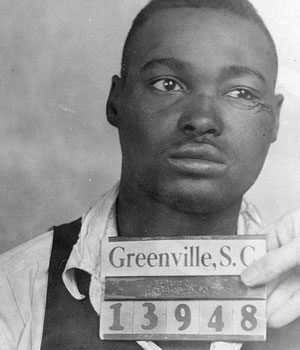
On February 16, 1947, Thomas Watson Brown, a white cab driver, picked up a black man on Markley Street in Greenville, South Carolina. Brown was later found half-dead, his taxi driven off the road in rural Pickens County. He had been beaten, robbed, and stabbed three times.

The Pickens County sheriff reported that muddy footprints at the crime scene led to the house of Willie Earle, about a mile away, where officers reportedly found cash, a blood-covered knife and bloody clothing. (Many of these facts have always been in dispute, but this is what was presented at trial.) Willie Earle, age 24, wasn't at his residence; he was in another cab, driven by a man who would later become one of the 31 defendants.

Earle was arrested and put in the Pickens County second-floor lock-up.

The news of Brown's stabbing traveled like wildfire, as did the news of Willie Earle's arrest. The nexus of unrest was the Yellow Cab office on West Court Street, where Greenville's taxi drivers had congregated in an angry pack, and started passing around a bottle of whiskey.

The Greenville News, recently granted access to some of the trial records and police reports, offers some chilling accounts:
The attitudes of the time are reflected in the casual manner in which one of the defendants, Hubert Carter, explained in his statement to police how he joined the mob.

The 33-year-old driver and father of four called for a ride home from the Cleveland Street taxi stand at 1 a.m. on the 17th, according to the Greenville Police Department file. He was picked up by another defendant, Paul Griggs, who "asked me if I wanted to go with the others to get the Negro being held for stabbing Mr. Brown.

"I told him I'd go along with the crowd," Carter said in his statement.
And so, in a tableau reminiscent of the famous scene in To Kill A Mockingbird (and perhaps it was an inspiration for it), the taxis all lined up in the early morning hours and drove in formation out to the Pickens County jail, maybe 20 miles away. It was February 17th.

I have often re-imagined the striking sight of the line of yellow cabs driving down the old rural road I have traveled down so many times myself. Did other people see them? They must have. Did the onlookers know where they were going? Did they tell their wives or girlfriends first?

And there was, sadly, no Atticus Finch to stand by the door. Instead, there was a jailer named Gilstrap, who suddenly had two shotguns pointed in his face. He didn't argue.

The mob took Willie Earle from the jail.

A call to Greenville's black funeral home, notified authorities of where the body was.

Thomas Brown died six hours later.

~*~

The first lynching since 1912, the murder of Willie Earle became big news. The trial was biggest lynching trial the state had ever seen. Most lynchings had never even been investigated, while this one had then-Governor Strom Thurmond threatening to put the perpetrators away (yes, you read that right). Time magazine sent reporters, and The New Yorker sent no less than Dame Rebecca West to cover the event.

From Time magazine:
Somebody "pulled the Negro out of the car by his belt." The drivers ''hit him several times with their fists and knocked him to the ground." One of the drivers pulled out a knife. "Before you kill him," he said, "I want to put the same scars on him that he put on Brown." Said Jessie Lee Sammons: "I could hear the tearing of clothing and flesh."

Then the drivers "beat the side of his head with a shotgun." Said Marvin H. Flemming's statement: "I could hear some licks like they were pounding on him with the butt end of a gun. I heard the Negro say, 'Lord, you done killed me.' " Finally, said Charlie Covington, he heard Roosevelt Carlos Hurd Sr., a Blue Bird cab driver, cry out: "Give me the gun and let's get this over with." Just then, "a tall, slender boy with bushy hair hit the Negro in the mouth and knocked him down. The Negro started to get up when Mr. Hurd took the shotgun. He shot the Negro in the head. He unloaded the gun and called for more shells. . . . Mr. Hurd shot the Negro two more times." The tissue of Willie Earle's brain was left hanging on the bushes. The lynchers went back to Greenville and drank coffee.
Of course, it was an all-white jury. Of course, they offered no defense at all. And of course, they were acquitted.

Of the acquittal, Dame Rebecca West wrote:
There could be no more pathetic scene than these taxi-drivers and their wives, the deprived children of difficult history, who were rejoicing at a salvation that was actually a deliverance to danger. For an hour or two, the trial had built up in them that sense of law which is as necessary to man as bread and water and a roof. They had known killing for what it is: a hideousness that begets hideousness. They had seen that the most generous impulse, not subjected to the law, may engender a shameful deed. For indeed they were sick at heart when what had happened at the slaughter-pen was described in open court. But they had been saved from the electric chair and from prison by men who had conducted their defense without taking a minute off to state or imply that even if a man is a murderer one must not murder him and that murder is foul. These people had been plunged back into chaos.
Chaos is the word. Chaos was the state of race relations in the south until the Civil Rights movement, when the chaos was at last addressed.

Next week, after many long decades, the spot where Willie Earle was murdered will be officially and historically marked. Future generations will not be like me, driving by a rural place in the road without knowing whose blood was shed there. We will see, and we will know.

Tessie Robinson, Willie's mama, died 8 years ago. I am so sad she will never see the memorial to her son.

For black people, a memorial and a reminder of what they already know and do not have to be told. For us white people, a souvenir of our savagery, and the cover-up of that savagery. Which is why the memorial has taken 64 years.

Rest in Peace, Willie Earle.

~*~

crossposted at Womanist Musings.

Nikki Haley begins terrorizing the poor and disabled of South Carolina

The mainstream press can't stay away from the story of the first woman governor of a deep-south state, born to immigrants. Nikki Haley is the lady of the hour, much as she was during the summer, when she won the primary and made the cover of Newsweek.

Needless to say, all this press-adulation undoubtedly translates into political capital:
COLUMBIA, S.C. (AP) — South Carolina Gov. Nikki Haley says she won a huge victory as the budget board unanimously accepted her choice to run the agency that oversees the state's finances and bureacracy.

The five-member Budget and Control Board on Thursday approved Eleanor Kitzman as executive director.

Unanimous votes are rare on the board led by the governor. For eight years, former Gov. Mark Sanford fought with the board's legislative leaders.

Haley says she hopes the vote is a sign of things to come.
I'm sure it is.

It is notable that Haley is appointing a lot of women to state positions. Not my favorite women, but women nonetheless. (It's a mama grizzly thing, I wouldn't understand). From WIS-TV:
Haley nominated attorney and former prosecutor Lillian Koller to take over as head of South Carolina's Department of Social Services. "She brings a true amount of experience in a time where South Carolina needs it," said Governor Haley, "She brings a lot of reform and conservatism at a time where South Carolina wants it."
Koller promises to cut more services.

Which services are those? I wasn't aware we had any social services left, but I'm sure they'll find something to take away from us.

And guess what? LET THE GAMES BEGIN! Lawsuits Follow New DSS Director Lillian Koller To SC:
In November of 2010, a lawsuit was filed claiming the state of Hawaii was falling behind on handing out food stamps to families in need. Federal guidelines require food stamp applications to be processed within 30 days.

Documents in the suit filed against the state of Hawaii and director Koller say that only 78 percent of applications were processed on time. During that same time, the departments staff was cut and the state lowered the eligibility requirements for food stamps, encouraging more to apply.

If the federal government finds that states don't distribute 80 percent of the benefits in a month there could be fines. So far, Hawaii hasn't been fined.
South Carolina gets Hawaii's cast-offs! Oh goodie.

And today, Haley outlines cuts of just more than $110 million:
Gov. Nikki Haley will propose cutting payments to doctors and hospitals for treating poor patients in a state-run health care program; requiring the use of generic cancer, HIV/AIDS and mental health drugs; and eliminating state funding of South Carolina ETV and the state Arts Commission in her State of the State speech tonight, according to an Associated Press interview.
...
The largest savings would come from reducing what doctors and hospitals are paid to treat patients in Medicaid, the state-run health insurance program for the poor and disabled. For each percentage point reduction, according to the state Department of Health and Human Services, the state could save about $10 million. Lawmakers previously have barred the agency from cutting the rates that the state pays doctors and hospitals.

Allen Stalvey, vice president of advocacy and communications for the S.C. Hospital Association, said hospitals have been preparing for this news.
...
Hospitals are working on alternatives to a rate cut, Stalvey said, including increasing the $264 million in taxes that they pay to the state each year.

Still, Stalvey said, health care providers will be impacted.

“The small rural hospitals,” he said, “it could be disastrous for them.”

Ken May, executive director of the S.C. Arts Commission, said losing $2 million in state funding would shutter that commission's doors.

The commission, formed in 1967, supports South Carolina's arts community through arts education programs that bring authors, artists and dancers into schools, grants to individual artists, and operating money given to local arts organizations.

Much of the commission's state funding is matched by federal dollars.

"Cutting our funding means leaving federal dollars on the table and doing serious damage to the arts statewide," May said, adding a thriving arts community helps attract new industry and an educated workforce to the state.

"Everybody who talks about the world economy realizes that, if we are going to succeed, it must be through creativity and innovation. It's not going to be through blue-collar jobs or cheap labor. That's all gone overseas. If we're going to attract the people who work in those emerging industries, we have to offer a quality of life that attracts them," he said.

Eliminating the state portion of ETV’s budget would save $9.5 million.

Requiring poor patients on Medicaid and mental health patients to use generic cancer, HIV/AIDS and other drugs would save $991,000 a year, Department of Health and Human Services spokesman Jeff Stensland said.
Good thing I can get North Carolina public TV from here. Good thing I have medical insurance.

And those are the only good things I can think of in response to this horrific bullshit right now.

Nikki Haley is South Carolina's first woman governor

Well, they did it. It happened. It's official.

Nikki Haley, born Nimrata Randhawa, is now South Carolina's first female and first non-white governor. (Photo at left by Gerry Melendez of the The State newspaper.) She is also, at present, the youngest governor in the USA.


Some of her inaugural address is below. She is very open about her scary, Tea Party agenda, and even references the Tea Party in her speech:
Before we talk about our bright future, it's important to pay respect to our past. Our state has an incredibly powerful and rich history. It is one that has not always been pleasant, but one that can teach us many great lessons.

We have a history of fierce independence, and that independence has some remarkable relevance for us today. While in 1773 it was the Tea Party in Boston that became famous, there was also a whole lot of tea dumped in the Charleston harbor that December. We declared independence from Great Britain some four months before Thomas Jefferson wrote the Declaration of Independence in Philadelphia. And at Kings Mountain just over our northern border, our local militia – not professional soldiers – helped turn the tide of the Revolutionary War that brought us the freedom we still enjoy to this day.

Let's see: tax protests, tea parties, the grassroots beating the professionals – it does have a certain familiar ring to it.
Doesn't it, though?

Daisy pauses to suppress retching, collects herself, and continues...
Of course, when talking about our past, it would be wrong to mention our greatness during the revolutionary period without noting the ugliness of much that followed. The horrors of slavery and discrimination need not be retold here. They too remain a part of our history and a part of the fabric of our lives.

But I do take comfort in, and agree with, the words of columnist George Will, when he recently wrote this about our state's past struggles: “If the question is which state has changed most in the last half-century, the answer might be California. But if the question is which state has changed most for the better, the answer might be South Carolina.”

I stand before you today, the proud daughter of Indian immigrants. Growing up in rural, small town South Carolina, my family experienced this state and this country at its best. No, not every day was perfect. No, we were not always free from the burdens faced by those who look and sound different.

But we counted our blessings, and my parents reminded me and my brothers and sister every day how blessed we were to live in this country. We saw the constant example of neighbors helping neighbors.

For us, happiness existed in not knowing what we didn't have, and in knowing that what we did have was the opportunity to better our lives through hard work and strong values.

You see, my mother was offered one of the first female judgeships in her native country, but was unable to serve on the bench because of the challenges of being a woman in India. Now she sits here today watching her daughter become Governor of South Carolina, the state she proudly calls her home. When you grow up with a mom like that, the word “can't” is not in your vocabulary.

I will always be the proud daughter of immigrants. I will always cherish our family's experience. And I will always strive in my actions and in my words to make South Carolina a place where all of our children, regardless of race or gender, know that unlimited opportunities for happiness and success await them.
As long as you're a Republican!
Today, our state and our nation face difficult times. Far too many of our fellow citizens are without a job. Our economy is not growing as it should. Our state budget has its largest shortfall ever.

But when I survey this troubled landscape, I am not discouraged. We have faced tougher times before and come through them. We know that tough times can produce some of the best decisions. And it is our duty to make this time of challenge into the opportunity it can be to turn our state around. It is indeed a new day, and on this new day, we must commit ourselves to the proposition that failure is not an option.

When I think on our present economic challenges, I am reminded of the words of Margaret Thatcher, who said: “Once we concede that public spending and taxation are (more) than a necessary evil, we have lost sight of the core values of freedom.”
Did she really quote Margaret Thatcher?!

Oh dear God, we got trouble. Can the infrastructure of this state stand four more years of total neglect? Who is going to fix the fucking POTHOLES?

(((sobs)))
Nearly two years ago, the federal government in Washington decided to transfer its irresponsible fiscal practices to the states. And our state, like every other, accepted it. When we produce this year's budget, we will see the heavy price we pay for having done so.

In our coming actions, we must recognize that we will not produce the jobs our people deserve by placing higher tax burdens on our workers and our small businesses. And we will not reach prosperity by increasing state government's share of our economy.

Be assured, however, that I have every confidence we will achieve a much more prosperous place. And we will do so by going back to that spirit of independence that fueled South Carolina's leading role in defeating the strongest nation on earth two centuries ago.

When we embark on this new journey toward growth and prosperity, we must do so together, with one vision. A vision that is focused on the success of our families and businesses is a vision that is not impaired by partisanship, personalities, or distractions. We don't have time for that, and I won't stand for it.

Many times over the last eighteen months I asked South Carolinians to join a movement. That movement was never about one person or one election. Our state constitution requires the Governor and the General Assembly to work together to serve South Carolina well. And work together we will.

But the energy that drives our cooperation does not come from within this beautiful capitol building behind me. The energy comes from the sound of the people's voices. The success of the movement I asked you to join will be realized when elected officials are accountable for their votes, when citizen participation in government reaches new heights, and when the voice heard loudest is neither mine nor any other elected officials', but is that of the taxpayers of this state.

In the days, weeks, and months ahead, we have the opportunity to reduce state spending and make it more efficient. We have the opportunity to improve education and allow our children to be successful regardless of where they are born. We have the opportunity to strengthen our small businesses to help them create the jobs our people need. We have the opportunity to restructure our state government to make it more transparent, more accountable, and more respectful of the people of South Carolina.

We must seize these inspiring opportunities. If we do, we will have a state where good jobs are in constant supply, where South Carolina becomes the envy of the nation, and where we are so free of political distractions that the media is forced to report on good news. Just imagine that.

That is my South Carolina. It's the South Carolina I want for my children and for every family in our great state.

So, with faith in God, who knows what is right, And faith in our own ability to use the skills and judgment He gives us to do what is right, we can make this vision a reality.

Thank you. May God bless South Carolina. And may He continue to bless the United States of America.
Daisy sobs late into the night, whilst worrying about the roads, the schools, even the cops. I hope nothing catches on fire...